
HELENA, ARKANSAS
Canoe guru John Ruskey’s exploits along the Mississippi River have been featured in Southern Living, Outside Magazine, and National Geographic. But it’s his work with the at-risk children of this region of America that intrigued me: the idea of using a canoe as education; of transforming a log into useable art; of the dugout canoe as a life-changing experience.
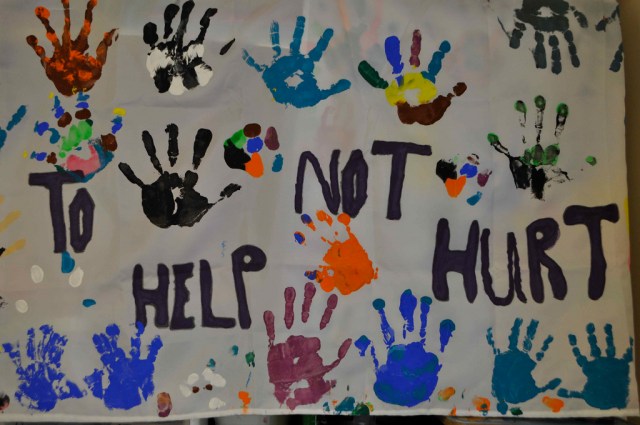
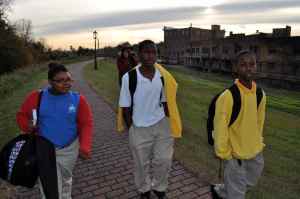 Garon, Fredrick, Brooklyn, and Veronica, four KIPP Charter School Middle School kids from downtown Helena, Arkansas smile as they walk the levee from their school to Mr. Ruskey’s Helena-based workshop. This is their second class at Quapaw Canoes, and even though their friends are catching the bus for home, these kids walk with a stride in their step.
Helena has a rich and illustrious past. As one of the few original bluff cities on the Mississippi River, the boomtown that once was is now an economically-depressed region, save – one of the only things going for it – the hope, promise and vision of the children.
Mr. Ruskey has been volunteering his time with the local KIPP Charter School for over a year, so when the principal phoned and asked if it would be possible to transform a log into an original dugout canoe, comprised of KIPP-only students, the answer was, “We’d love to do that.”
 Mr. Ruskey does not speak in sound bytes. He speaks from his soul and he speaks with conviction. When asked how art, education, and the Mississippi River come together, Mr. Ruskey explained, “They come together with each paddle stroke you take. If you watch the way a paddle cuts thru the water – it creates a double spiral on either side of it – and if you look at the shape of a classic canoe, it’s almost the same shape you see created in the water as you’re stroking the paddle. And that’s the wonderful thing about the Mississippi River and any moving water – but on the Mississippi you see it more than any other body of water I’ve ever experienced. You see expressions of patterns, of life patterns – the very basic patterns that govern our life – you see them expressed, constantly being expressed and then re-created over and over again. And so it’s actually there on the face of the water that you see all those things come together. One of our mottos here is
  that the River brings us together, and in that sense it literally does bring together education and canoes and art – they all come together as you’re paddling the canoe.”
The KIPP Dugout Canoe Project, as it is officially known, is a twice-weekly after-school class that begins with a pad of paper and a pencil. The students are asked to sit quietly and look at the log and visualize what it will one day become. Some draw the log as they see it while others draw a dugout canoe with an animal head. At some point, the kids, in coordination with their school, will vote democratically on what the final shape is to become. For now, part of the fun is just that idea alone. The idea that this cottonwood log can one day become anything and everything they hope and desire it to be.

 When Jay and Beth VanWinkle saw that their favorite actor, fellow Mississippian Morgan Freeman, was coming out with a new movie titled “The Bucket List”, Beth turned to Jay and said, “I’ve got to see that.” One year previous, Beth VanWinkle had been diagnosed with Alzheimer’s Disease, and has been, as she puts it, “grasping for everything I could get [out of life – before it’s too late].”
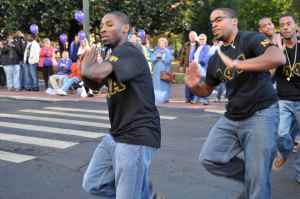 The film inspired Beth and Jay to write down a short list of ideas they wanted to accomplish before Beth permanently goes into, what she describes as her “cave” – a place where she will be in her very own world.
 In this report, we witness Beth leading the first annual Oxford Memory Walk as well as the story of Beth’s realization of her third and final wish – to ride a horse – a story which she will now be able to replay again and again, as her memory continues to fade.
 The cemetery is important because it was the first African-American graveyard of the region, founded in the 1870’s by the “Sons of Zion”, who were former slaves. The property was in use until the 1970’s but quickly slid into disrepair shortly thereafter. In the 1980’s and 1990’s there were rumors of the gravestones being used as “chop shop” jack props for car thieves and as a result – this was a location that the general public would dare not venture.
 Local activist Ken Hall of Volunteer Mid-South has been working with local volunteers to correct that for the past nine years.Currently, approximately eighty percent of the property is still covered by overgrown brush, weeds, and thorn bushes – but Mr. Hall is optimistic that one day this will change.
 American youth. Armed with machetes, mowers, and clippers, they go in search of the gravestones of the Sons of Zion by re-claiming the land for the future generations of those buried here.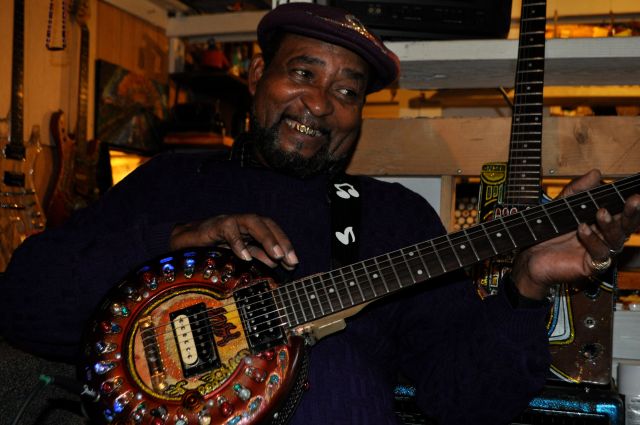

 Photo by Neal Moore.
 My muse for this story was singer/songwriter Stace England, who dedicated an entire album to the living legacy of Cairo, titled Greetings from Cairo, Illinois. After shooting a rather haunting rendition of “The North Starts in Cairo, Illinois”, Mr. England explained, “When [blacks] were traveling by bus from the South they were separated by a curtain from the white riders … They could take that curtain down in Cairo, because the North started here. So you can imagine people who had lived with segregation their entire lives getting into the land of opportunity [which would have been] a very dramatic thing.”
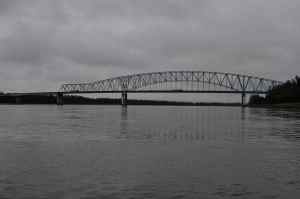 Cairo, Illinois is geographically important due to its location as the very first city of the North, located at the confluence of the Mississippi and Ohio Rivers along the Mason- Dixie Line, a place locals refer to as “the epicenter of the country.” As such, Cairo was referred to as “the promised land” by runaway slaves, headed north. “If you made it to Cairo and crossed the Ohio River, then you could consider yourself to be on somewhat free territory,” explained Bishop Paul Jones, who serves as Alexander County’s Circuit Clerk at the local Courthouse.
 Take a look around, as Mayor Childs would say, “with your eyes and your ears” and one will find that folks here have moved past their racial differences. In only a few short days in town, I was able to witness this firsthand, from the positive energy of the teachers of the Jr. and Sr. High School, to a “20/20 Vision” program embraced by local entrepreneurs and city officials alike, to a number of patrons at the town’s local hangout, the Nu Diner, who confided that Cairo is, symbolically hand in hand, simply moving forward.
 22 Rivers