
PRAIRIE du CHIEN, WISC
Sustainable agriculture meets sustainable communities in Prairie du Chien, Wisconsin. Albeit, for a town that bills itself as “forward thinking” it was interesting to witness first hand a winning strategy that effectively brings them back to their roots.
 Pam Ritchie, Executive Director of the Opportunity Center and the former chair of Prairie du Chien’s Main Street Revitalization Project refers to her work as “community cultivation.” As she explains, “There are a lot of stories [from] many, many years ago about what Prairie du Chien looked like on a Friday night and it was lined with farmers in overalls and families on the streets – talking, gathering together, doing their shopping for the week – spending their money locally and supporting these businesses which in turn supported them.”
One of these farming families would have been the ancestors of six-generation sustainable cattle rancher Greg Koether, who resides on his family’s 600-acre ranch just over the bridge in McGregor, Iowa.
Besides raising and marketing his cattle locally through Grass Fed Beef, he takes time out of his schedule to introduce the importance of quality,  sustainable food practices to the bright young learners at Prairie du Chien’s B.A. Kennedy Elementary School.
And he’s most certainly not alone. When the school did not yet have a “Farm to School” initiative in place, local parents and self-described “concerned citizens” Kathleen Hein and Marty Green developed a spin-off all their own which they called “Food for Thought,” complete with the motto: “Our Food – Our Community.” The big idea, “To educate the kids about where food comes from, grow a children’s community garden on school grounds, help local farmers by getting their products into the school lunch system, [and in so doing to] connect the community.”
Walking the streets of Prairie du Chien it is easy to feel a genuine excitement in the air from farms to schools to downtown businesses. As Pam Ritchie explains, “There was a group of citizens that really got serious – they got to the point where they were ready to apply for a Wisconsin Main Street status  and with that they were able to hire an executive director and create a membership of both downtown businesses and community members.”
Which has made all the difference – the bold, rather simple idea that when you talk about revitalizing downtown business, it’s not only business owners that are interested in creating change. Residents of the town can and do participate in effectively giving their downtown district a facelift – in so doing, creating what Kathleen Heim described as “a snow-ball effect” of bona fide town-wide enthusiasm.
Jake Stephens, originally from Florida, is considered a “new resident”, only having lived in this town for ten years. In an area where most families go back five or six generations it can be a daunting task to blend – to fit in. And yet as a direct result of Prairie du Chien’s revitalization he has decided to participate – to share his ideas and his talents – in essence to share with the town the time of his life. When asked to offer a definition of the term “sustainable community” from his perspective, Jake explained, “A  sustainable community [is] a community that … feeds itself, if you will, that keeps its energy churning and building here rather than going elsewhere.”
“The word ‘community’ is really starting to mean that here,” continued Jake. “Its great … it makes me wonder what I was doing for the past ten years and why I didn’t get involved because just a few people can make a difference. That’s what it all means.”

 Flash River Safari was featured on CNN International’s weekly citizen journalism show “iReport for CNN” this past weekend. To view the segment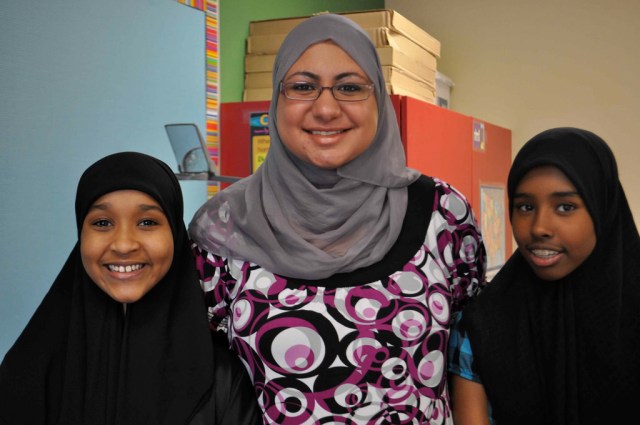
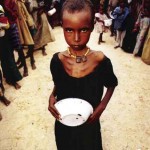 “They heard rumors of a famine creeping across southern Somalia, [and] they wanted to visit the region themselves and see if there was any truth to the stories,” explained Kathy Eldon, Dan’s mother. “[He] was in Kenya for the summer, before returning to UCLA that autumn to continue his studies, [and] was utterly stunned by what he saw – hundreds of dead and dying women, children, and old people; thousands displaced in a desperate search for food. Although barely able to view the horrors unfolding before him, he shot them with his camera and they were among the first to be seen by a global audience. Moved by the response to his images, Dan returned again and again to Somalia, recording the aid that flowed into the country- and its decline into chaos. He never returned to UCLA.”
 “I learned that when you’re a journalist, you get to save people’s lives,” explained Ruqiya. “Not physically, but emotionally – because there’s people
 President Abdirahman Mohamed Mohamud‘s question to the girls and their class was if they had plans to come back to Somalia. The girls told me that they smiled broadly when asked this question, answering together, in unison: “Yes, we do want to go back to Somalia … We want to make a difference.”
 Jesse represents three generations of river-men who presently man their set of two tow boats and multiple barges – a local family run business who represent over 100 years of experience working the river between them.
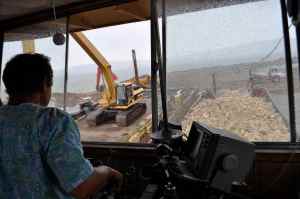 The islands are comprised of a layer of sand which is dredged from up stream in the river, a layer of rock, followed by the planting of native grasses and rows of willow trees to help buffer the island while attracting a number of waterfowl, turtles and fish.
 (11/28/07)
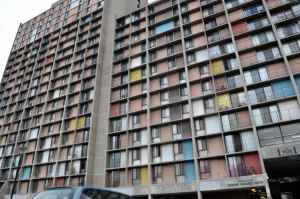 Starting from the Brian Coyle Center of the University of Minnesota where Somali children of all ages worked on computers, talked music, and played basketball, we moved through the inner-city landmark of Cedar-Riverside Plazas, a low-income housing set of buildings – all colorful beyond belief – which have been reclaimed from a once drug/gang infested stronghold. “You used to not be able to enter that area,” explained Ms. Hakeem, who ran for City of Minneapolis Mayor back in 2005 under the Green Party banner. “But now you can walk around freely, even at 10pm at night. When the Somali refugees began to arrive, they naturally moved into the least expensive section of town – Cedar-Riverside.”
  Part of learning about pride in your community comes from actively pitching in to help it out. As we moved along the streets and under the bridges, Ayan and Mary introduced me to their latest community project – a mural of Minneapolis they are working on in conjunction with “Articulture”. Here, Executive Director Elizabeth Greenbaum explained that when it comes to at-risk kids mixed with art, “art is a wonderful equalizer, especially for students who don’t succeed in other subject matters. When you think about it and take it a step further, we’re talking about the basic understanding and the basic concepts to write – and that leads into reading and that leads into learning – so [the] arts are very much orientated to learning on all levels.”
 22 Rivers