TRIBUTARIA – Poetry, Prose, & Art Inspired by Tributaries of the Ohio River Watershed

Dear Friends,

I’m thrilled to be included in the creative new anthology TRIBUTARIA – Poetry, Prose, & Art Inspired by Tributaries of the Ohio River Watershed
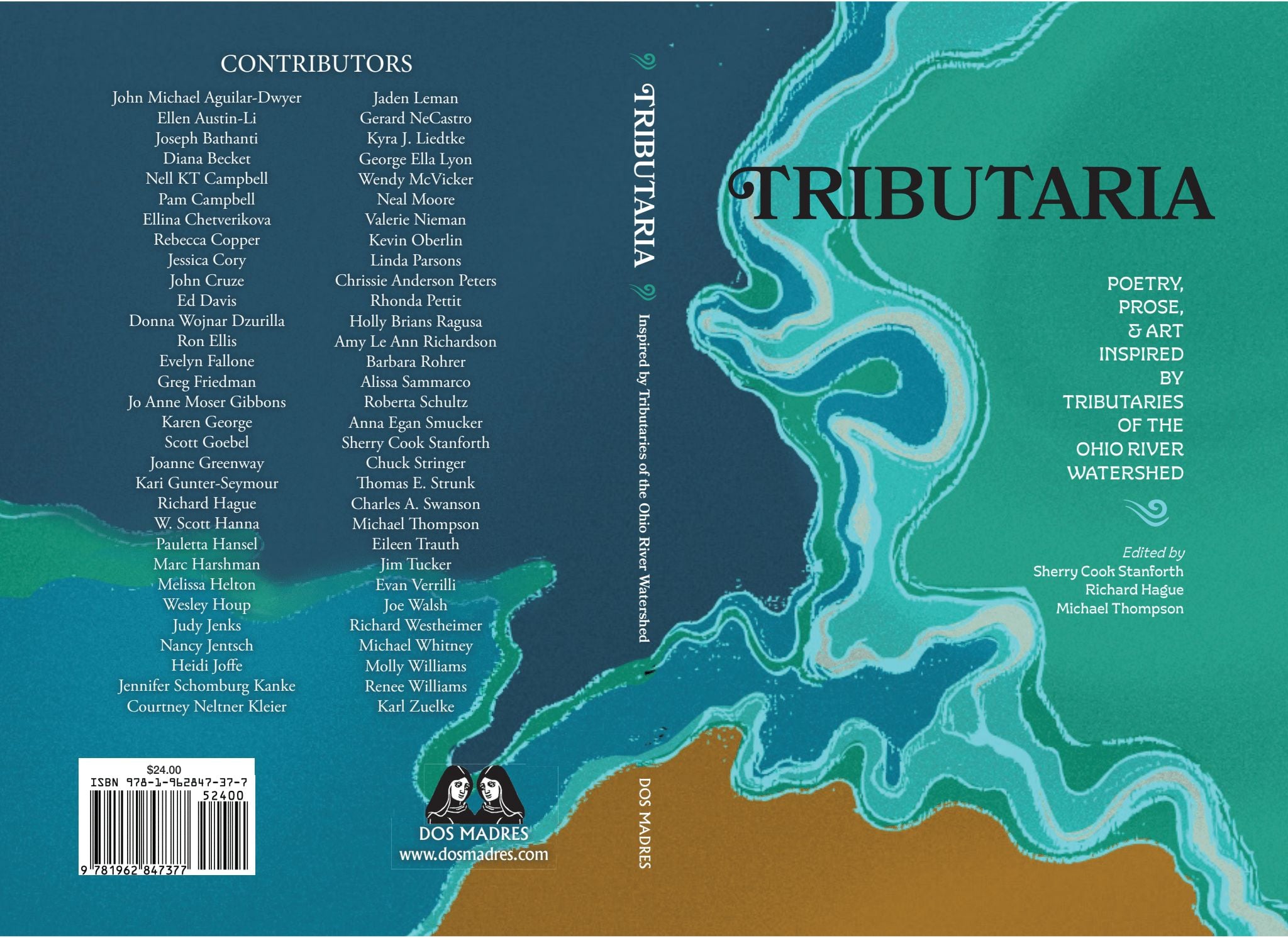
Overview by Managing Editor: Sherry Cook Stanforth & Literary Editor: Richard Hague

The contributions of poetry, prose, visual art, and photography in this collection form a creative tribute (using one meaning of the word) to one of the largest river systems in North America. The Ohio River Basin’s scenic and historic tributaries—rivers, streams, creeks, and rills—are flowing through nearly 204,000 square miles of territory, impacting more than 25 million people living in areas of Pennsylvania, Ohio, Kentucky, West Virginia, Indiana, Illinois, Tennessee, New York, Virginia, Maryland, Georgia, Mississippi, Alabama, and North Carolina. Nearly five million people drink water from the Ohio River itself, and millions more depend on the commerce, recreation, and transportation provided by its connected watersheds. The lovely living gift of the ohi:yó sustains us, body and soul.

And yet this precious lifeline, this vast and beautiful ecosystem, is being sickened by pollution, rewritten in the specialized, expressive language of dioxins, furans, PCBs, mercury, VOCs, phthalates, POPs, phenols, polycyclic aromatic hydrocarbons, HAB dead zones, E. coli contamination, on and on and on. In 2023, the American Rivers conservation group listed the Ohio River as the second most endangered waterway in the country. This diagnosis came well ahead of the February 3, 2024, Norfolk Southern train derailment in East Palestine, Ohio, that dumped at least five different toxic chemicals into a cradle holding people, flora and fauna, forests, fields, farms, parklands, yards—and of course, ever-moving water sources. And so Tributaria sings an elegy for irrevocable damage to the living world, even as it celebrates its sacred beauty.

Former US Poet Laureate Joy Harjo witnesses for us all the practice of intentional connection, of learning to claim (and reclaim) what exists beyond our immediate senses: “When I began to listen to poetry, it’s when I began to listen to the stones, and I began to hear what the clouds had to say, and I began to listen to others.” May these words and images invite that accountable, curious tuning. Tributaria offers only a glimpse into the complex heart of Ohio River country’s flowing waters, riparian margins, diverse life forms, geological features, and industrial properties. The living energy of nature and culture cannot be contained by simple designs and functions. Our stories of water will move throughout time, while we remain bound to the unfolding plots and diverse settings that shape our essential well-being within all of creation.

Edited by Sherry Cook Stanforth, Richard Hague, Michael Thompson


Excerpt

A Conversation with Uncle Clem
by Courtney Neltner Kleier

What’s my inheritance?
The Fourmile Creek
The dirt below your feet
A name intact

Where’s my money?
In the creek bed
Deep, with our buried dead
Gone, that’s a fact

What’s my name?
Neltner
Reis
Schack

Where you go, can I follow?
Yes, I reckon so
No
Maybe, in these last days

Where are we going?
To hell if we don’t change our ways


Many thanks to Sherry Cook Stanforth and Dos Madres Press for the invite, an Ohio Not For Profit dedicated to the belief that the small press is essential to the vitality of contemporary literature.

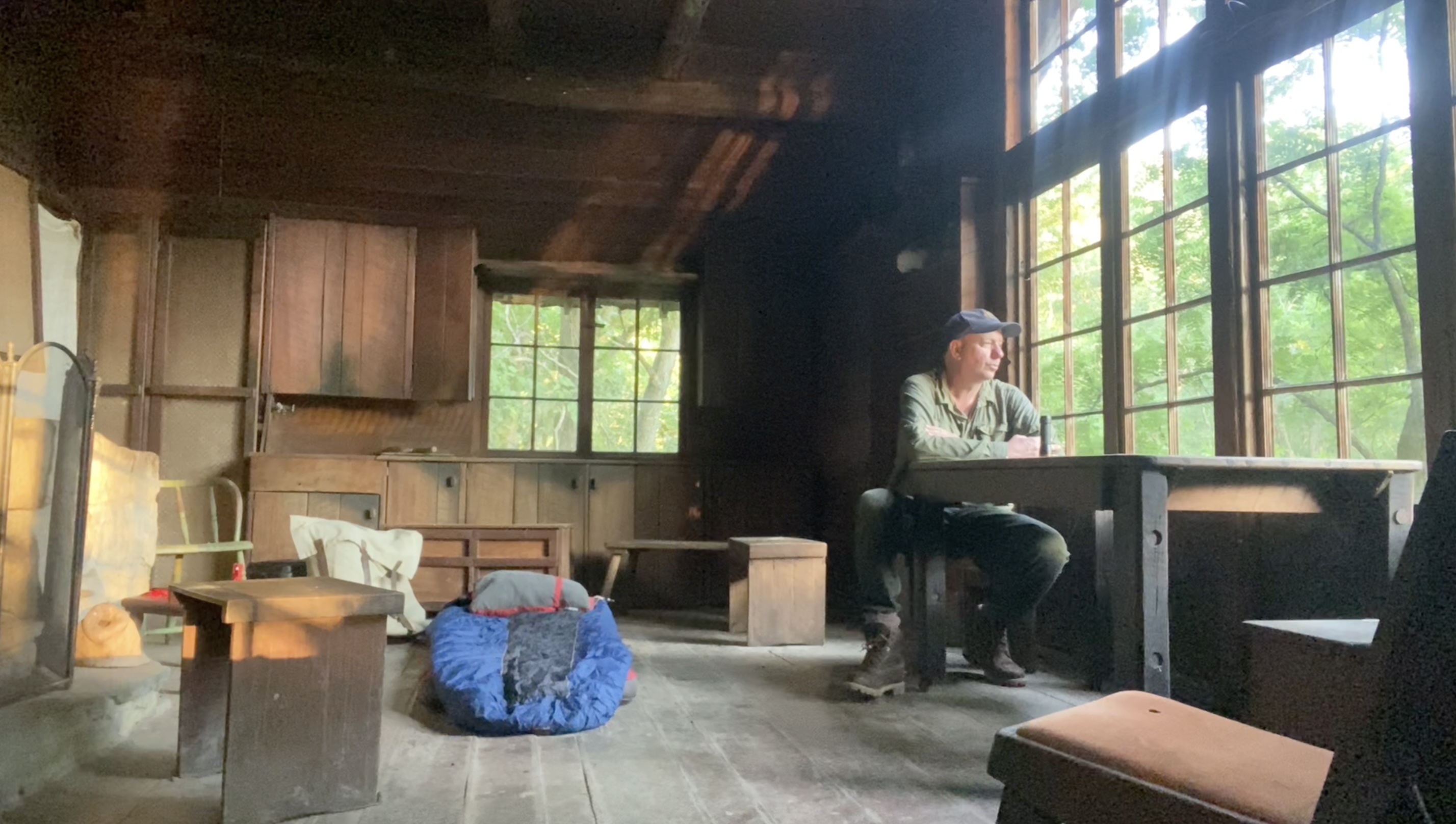
A Return to Harlan and Anna Hubbard’s Payne Hollow

By Neal Moore

On a recent two-week canoe expedition down a portion of the Ohio River, I had the pleasure to visit and bed down at Harlan and Anna Hubbard’s beloved Payne Hollow near Milton, Kentucky. The Hubbards lived here from 1951 to 1986, subsisting off the land with no electricity and only cistern water. Harlan was a painter and writer and Anna was a librarian and musician. Together, they lived in harmony with the landscape for 35 years. Harlan designed and built Payne Hollow out of wood and stone, along with a detached studio.


“This is the day we begin a new venture, facing now the true direction.” – Haran Hubbard

It wasn’t my first visit to the property. Back in 2021, while paddling up the length of the Ohio River on my cross-continent sojourn, I’d often slog it out from first light until sundown – and beyond. On June 16, 2021, I was pushing for the boat docks at Madison, Indiana just up and around the bend, but came up short. The curtain of night fell, there was a frenzy of tow and barge traffic in the river up ahead, and as I looked to my side, the perfect stealth camp spot materialized.

A spit of land jutted out into the river just so along the Kentucky shoreline. It was flat and inviting, and I happily paddled to the riverside. Pulling my canoe and gear out of the water, I set up my tent, and took a seat along the riverscape, taking in the majesty of the stars and the firmament. It was a special place in my mind – I could feel it – so I marked the spot on my Google maps with a heart. I didn’t then know I was camping on the shore of Payne Hollow.

Payne Hollow by Harlan Hubbard, 1986, Oil on board. On display at the Behringer-Crawford Museum via the Caddell Collection. Photo by Neal Moore.

I’d soon become intimate with the art, life, and story of Harlan and Anna, along with a need to save their seven-turned-sixty-acre oasis connected to the river. By 2022, the property had fallen into a state of neglect. The owner had health issues and was not able to visit as regularly as was needed. There were reports that racoons had invaded the home and that it could soon be destroyed. I’d befriended a group of Louisville, Kentucky academics and artists, along with a separate group of Madison, Indiana concerned citizens who wanted to see Payne Hollow saved. I helped to bring the two groups together, to organize a meeting at the home of Bob Canada of Madison, Indiana, a retired dentist who had befriended Harlan and hosted him until the end of his life. My hope was that the two groups could put their collective experience, expertise, and influence together to purchase and save it. Which is exactly what happened.

Neal Moore getting ready to bed down for the night inside Payne Hollow on the evening of July 22, 2025.

From my perch of a porch outside the side door of Payne Hollow, the steady flow of the Ohio could be viewed through the trees. As I sat and admired the wildness all about me on this recent exploration down the river, there was a moment, in concert with the sun’s final rays, when I could hear voices. When the trees rustled in a lack of a breeze and I felt the hair on the back of my neck stand up. It was the height of summer and sweltering hot but then it turned cool. I thought of the Wendell Barry-inspired pastoral ghost story opera “Payne Hollow” and the line of Harlan talking about the music that’s just out of hearing. I was sure it was a haunting. And with it the realization the Hubbards are very much still here. And then it passed, and I was at peace once again.

The sun had set proper and there was that golden strip of an afterglow. Just at near-dark there was the hum of an approaching tow pushing up the Ohio. The river acted as a muse for many of Harlan’s works, along with the home itself and surrounding landscape. I thought of Harlan in such a circumstance – with such an oncoming tow – that he might grab for his paint brushes and a found strip of wood or tin or available canvas and head down to chronicle the waterborne paddle-wheel tow of yesteryear. I rose from my seat and bounded down to the river to capture the passing modern-day vessel with my camera. With a smile and an understanding that he’d seen and chronicled countless such images.

A solitary tow pushes upriver past the shoreline of Payne Hollow on July 22, 2025. Photo by Neal Moore.

Back up on the hill, I rolled out my sleeping bag onto the floorboards of Payne Hollow, took a swig from a bottle of Kentucky bourbon for good luck, and closed my eyes. Morning dawned through the windows bright and cool and clear without further incident. I woke from a peaceful sleep, rubbed my eyes, and rolled up my sleeping bag. Packing up my river bags and heading out the door, I paused before locking up to poke my head back into the home and say, “Thanks for the stay, Harlan and Anna. It was delightful.”

***

“Anna and I were attracted by the very conditions which caused it to be abandoned. We are unique among its inhabitants, not farmers, nor fishermen nor shanty boaters in the accepted sense; yet closer to the earth than any of them, with true respect of the river and the soil, and for Payne Hollow. May it long remain as it is, not merely for our selfish enjoyment, but for the satisfaction it must give many people to know there is such a place. Few wild pockets are left along the river these days.” – Harlan Hubbard from Payne Hollow: Life on the Fringe of Society

Many thanks to Payne Hollow on the Ohio for the invite, a Kentucky non-profit with a goal to sustainably preserve, protect, and promote the legacy of Harlan and Anna Hubbard.

Roads and Rivers: Neal Moore Interview

American Miles: A Roadtrip Podcast

By Joshua Colvin

In this episode of American Miles, host Josh Colvin takes listeners on a journey through the heart of America, featuring conversations with truck driver Andy Patterson and author and adventurer Neal Moore who crossed the entire United States by canoe.

Josh asks Andy for stories from the trucking life and also whether truckers still use CB radios.

Neal shares the inspiration behind his voyage, daily life on the water, and the lessons learned from nature and human interactions along the way. He reflects on the liberating feeling of minimalism while traveling, and the beauty of encounters with diverse individuals.

For the Small Town Talk segment Josh calls Madison, Indiana for a discussion with local, Michael Fortunato, owner of Crawdaddy Music Center. They discuss Madison’s rich history and vibrant music scene.

Later, Neal Moore reads an excerpt from his book, Down the Mississippi and for the Songwriter Series, Dan “Big Hands” Colvin performs his song “Margarita.”

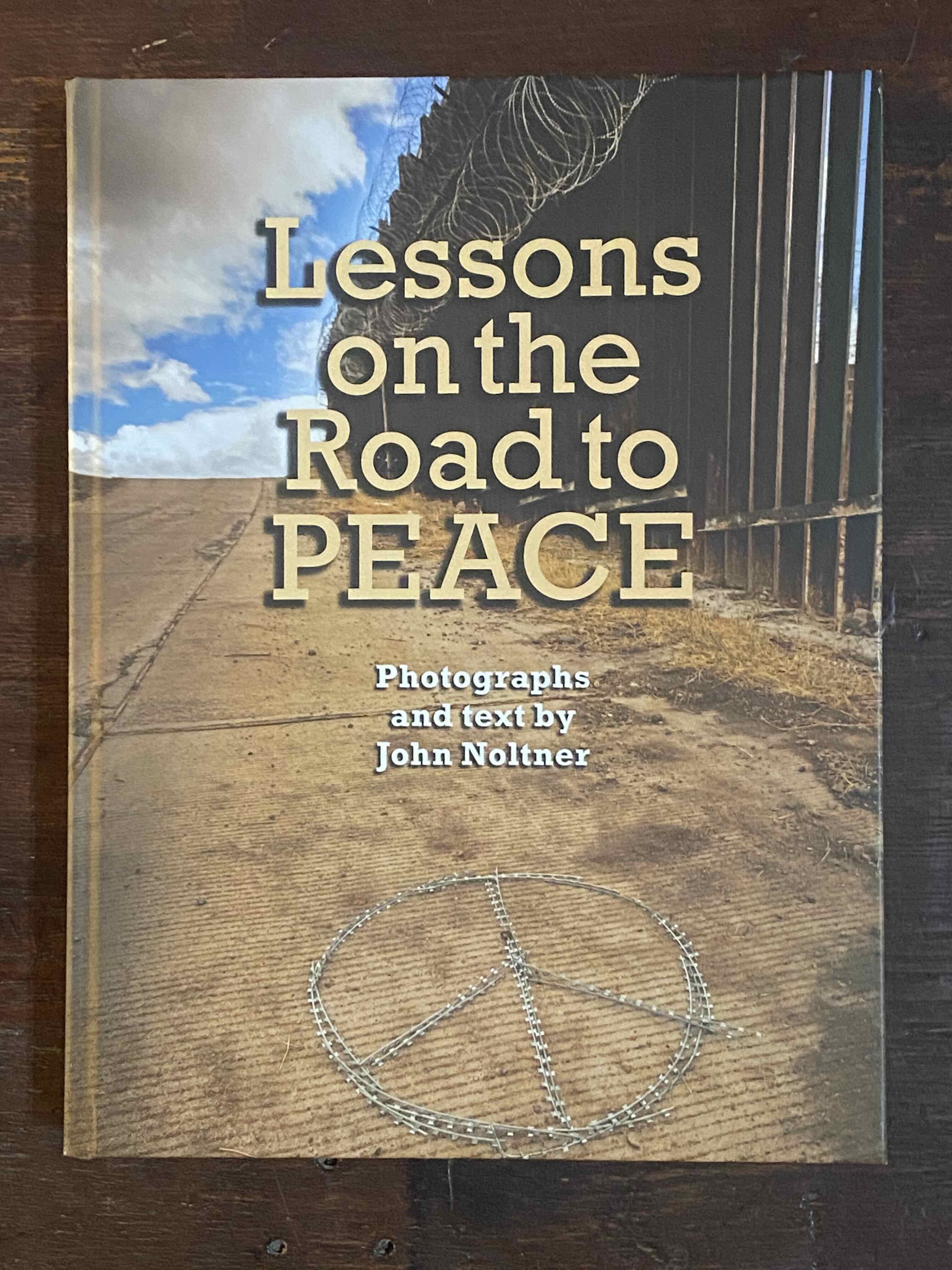
Lessons on the Road to PEACE

A huge congrats to John Noltner and his new book: Lessons on the Road to PEACE. I met John on the banks of the Tombigbee in Columbus, Mississippi midway along my canoe expedition across America. In John, I found a kindred spirit. He’s a storyteller, a photographer, and a seeker of the positive – in search of how we can and do come together as a nation.

John was traversing the landscape (with his wife in an RV) and showcasing his then current book A Peace of My Mind. He interviewed me as part of his rambling feel-good series and asked if he could take a photograph. We made our way down to the Tombigbee, he positioned me just right in the light, I cracked a smile, and he snapped this photo to be included in his newest book.

John’s work has been showcased in National Geographic Traveler, Smithsonian, and on Good Morning America. It’s always fun to meet a fellow adventurer from which to learn and absorb positive energy. This book will help you find the courage to smile and rekindle a belief in humanity especially in trying times. I’m thankful to John and am pleased to call him a friend. Somewhere out there, right now, out on the open road, gritty and raw and real, John is collecting the stories of our better angels and spreading the hope of peace across this land.

An Ode to the Ambitious Traveler

By Neal Moore

The one and only Trips magazine

I picked up my first copy of TRIPS magazine at a “safari & travel” Banana Republic store of yesteryear. I was a kid, it was the late 1980s, and I can say – as oddball as this might sound – that I’ve spun the globe with it ever since. Its mantra of what travel can (and should) look and feel and taste like, open-mindedness-wise, sense-of-curiosity-wise, and being-alive-wise – “to get as deep inside a culture as constraints of language and understanding will allow” – has helped form my take, my very own spin on this world.

There was only ever one issue produced – so the Spring 1988 edition serves as both the debut and finale edition. I lost my original copy a long time back and have since given away many more, so I try to snag one every chance I get (thanks eBay). I like to think of TRIPS as a bible of adventure, a relic of expedition, and an unadulterated view into the “safari & travel” vision of Mel & Patricia Ziegler, founders of the long-abandoned (original) Banana Republic. 

Tara Sendelback of GPF in the Travel Books section of Banana Republic (March, 1988) – Photo by Richard Lee, Detroit Free Press.

The Zieglers, both retired journalists with the San Francisco Chronicle, hired their friends, established ink-slingers to write the magazine’s copy. It was clearly a labor of love.

Flip the pages, and the articles will transport you in search of the soul of Hawaii with National Geographic journalist Marguerite Del Giudice; hurl you into Apartheid-era South Africa with Rolling Stone, The Village Voice, and Esquire writer Mark Jacobson; bike alongside His Majesty, the King of Tonga with screenwriter, actor and novelist Charlie Haas; and Ride to the Back of Beyond (of Australia) with photographs by Hakan Ludwigsson and text by Newsweek’s Tony Clifton.

Mel Ziegler, Banana Republic founder and editor-in-chief of TRIPS magazine on a trip to Burma (in 1988). Photo credit: Patricia Ziegler.

The magazine was likely the first to introduce The Thorn Tree Forum into print, an idea picked up and popularized by Lonely Planet eight years later in 1996.  “…It was, effectively, Kenya’s first postal system,” explains the Zieglers, referring to an old thorn tree in the courtyard of the New Stanley Hotel in Nairobi where travelers used to pin their urgent, cryptic messages. “We borrowed the name for this column. Items will be culled from letters, news clippings, documents, anything concise and interesting that crosses our desk. Travelers’ tales, tips, observations, complaints, and cultural artifacts are welcome.”  

To get the oddball rolling, first-hand travel tips from veteran travelers were offered – from “How to turn a golf ball into a drain plug for overseas bathtub,” to “Create a travel journal as you go: Mail postcards to yourself!”

I love them all – the sketches, the travelogues, the photos, the irony, the off-the-beaten-track discoveries. One of my favorite travel tales, penned by Sports Illustrated/human interest writer Gary Smith, whisks the reader onto a Portugal-bound train chockablock with banana and fish smugglers.

Patricia Ziegler, Banana Republic’s founder, on camelback in the Australian Outback (in 1988). Photo Credit: Mel Ziegler.

I’ve hiked with TRIPS across Tigray, Ethiopia, adventured with it into the dusty dorps of the Klein and Groot Karoo of Southern Africa, listened to the call to prayer through wooden shutters with it in Islamic West Luxor, and gotten lost with it in the back alleys of Bangkok, Hong Kong and Taipei — some of the places I’ve called home. These days, I find myself canoeing with this tried and trusty and true companion across America, most days carefully stowed away in my dry bags, and on days like today, taken out to peruse and inspire.

After all this time, the magazine remains a jolt to the system. It hurls one back to a now-bygone era when travel was fun – to the late 1980s, to be precise, before Banana Republic was taken over by the Gap – when the company had a climate desk “so that no matter which way the wind blows, you’ll arrive becalmed,” along with a travel bookstore, “to attract the ambitious adventurer – with or without armchair.”

Neal Moore’s Two-Year Canoe Journey Across America and Into the Light

Fourteen months ago in Astoria, Oregon, Neal Moore shoved off in his 16-foot Old Town canoe, bound for the Statue of Liberty, some two years and 7,500 miles ahead. The 49-year-old had come home after nearly 30 years abroad to rediscover America and share the stories of its people in a style of journalism all his own, “slow and low down from the view of a canoe.” …

You can read Jeff’s entire expedition interview at Adventure Journal here.

First Year of the 22 Rivers Expedition

One year on the water and I find myself in New Orleans, the end of the second leg of my “22 Rivers Expedition” across these United States. It’s been a wild year for one and all, and for me, there’s been no exception. Weeks into my cross country paddle the Covid-19 pandemic hit. After discussing with trusted friends and colleagues, I determined that with the canoe as my only home, sheltering in place meant continuing the journey. New Orleans represents 4,400 river and portage miles behind me, leaving another 3,100 to go next year to make NYC. Cheers for everybody’s encouragement, friendship, and support. It absolutely means the world.

Roll On, Columbia, Roll On

Astoria, Ore.  A version of this story first appeared in the “22 Rivers” newsletter. You can sign up for free right here

thumbnail
Ray Roberson of Saint Maries ID finishes a set at FisherPoets Gathering in the Voodoo Room. Feb. 29, 2020. Astoria, Ore. Photo by Neal Moore.

When Jon Lee and his band Slimeline kicked into “Roll On Columbia” the tightly packed crowd at Astoria Brewing Company joined in. It was FisherPoets weekend at the mouth of the Columbia River, an annual gathering of grizzled fisher folk from Alaska to California who come to celebrate their craft with prose and poetry and song. Old and young here know Guthrie’s ditty by heart, and Lee, a descendant of over a century of Chinese cannery workers in Astoria, sang it with gusto.

But the Columbia no longer rolls – thanks in colossal part to the Grand Coulee Dam for which “Roll on Columbia” was penned – and this was Lee’s point: to encourage debate.

Lee had asked his friend Scott McAallister, a commercial fisherman from Juneau, Alaska, to interrupt him half way through. And so he did. The duo yelled back and forth for some time in pre-scripted fashion. McAllister arguing that Guthrie was a tool of the Corp of Engineers who never cared for the Columbia or the men and women who worked her. And Lee, that Guthrie, who could do no wrong, was being ironic.

“Ha, that would be the ultimate,” Robbie Law, Lee’s cousin and member of Slimeline, later told me. “To have the Bonneville Power Administration pay for you writing subversive lyrics.”

As big a boon as Alaska is for fishermen today, the Columbia River was once bigger. “It was just a wealth of big trees and salmon and water,” Lee said. “It should have sustained us. But we squandered it. It should have lasted forever.”

Lee’s friend, the writer Victoria Stooppiello, was born and raised in the Lower Columbia region. Her father, grandfather, and great-uncle were commercial fishermen their whole lives. In an essay titled “Denial is Not a River” she conjured the folly of over-logging and the damned dams and renewable energy through the lens of an economic enterprise zone.

Many of the professional fisher folk had a streak of activist in them. For they rhymed not only about the joys of the salmon runs of Bristol Bay, a region of Southwest Alaska, but the need for the EPA to reverse its recent verdict to allow the National Environmental Policy Act permitting process to consider mining it.

To once and for all disallow Pebble Mine, a porphyry copper, gold, and molybdenum mineral deposit project that will replace the sanctity of the salmon and these waters for the bounty that lies underneath.

Closer to Astoria, the presenters here assembled were passionate about the Columbia River, reflecting on the over-fishing that led to smaller fish and lessened runs, along with other obstacles the salmon now face.

As one fisher poet concluded at the gathering’s farewell event on Astoria’s fabled Pier 39, referring to the dams and the engineers who built them, “Sometimes it seems instead of one apple, we’ll devour the whole damned tree … So, it’s time to step back and take a long sober look, and conclude, Mama Mia. Let’s go back to the software, and try to come up with what’s really a good idea.”

A Glimpse of America’s Soul

“Modern Day Huck Finn” Neal Moore stops in Louisiana

BY JORDAN LAHAYE FONTENOT

COUNTRY ROADS MAGAZINE

Photo by Adam Elliott

When the Down the Mississippi author and adventurer Neal Moore set out for the second great expedition of his lifetime in February of 2020, he had no idea that his two-year, 7,500-mile documentarian trek by canoe would wind up navigating a nation mid-pandemic. 

The original plan was to exercise slow journalism while covering the distance of twenty-two rivers and twenty-two states—from Astoria, Oregon to New York City—all in order to “come face to face with America’s soul.” “The idea was to go, from coast to coast, within two years—leading into the national elections and the aftermath thereof,” said Moore. “What I’m trying to do is to look for positive stories of what unites us as a country.” 

 And while the onslaught of the COVID-19 pandemic has complicated some logistical matters of Moore’s trip—and in many ways made it more solitary—he admits to the value of being in a position to document this particular America, this particular moment in history. “If anything, this has enhanced the storytelling,” he said. “It’s during hard times when people and families and communities really step up, and I’ve been able to witness a lot of that.” 

After completing the first of three “Acts” mapping his path—a 1,111 mile upstream and uphill journey up the Columbia, Snake, and Fork rivers to MacDonald Pass in Montana, completed in ninety-seven days—Moore headed 3,249 miles down the Missouri and the Mississippi, pointing straight towards our own Big Easy. And in mid-December, so close to the end, he made a stop in the Red Stick. Over the course of five days, he made the obligatory stops: beers in a Spanish Town backyard, three meals at Poor Boy Lloyds, breakfast at Louie’s. And from his Hilton room  downtown, he spent most evenings looking out at the river, which he’s come to know quite well.  And as an outsider, he observed that Baton Rougeans know her too: “The residents of Baton Rouge have relationships, with this river and with nature, and with each other—neighbors in Spanish Town who are friends and actually know each other—you just don’t see that in lots of larger cities.” 

Just before our press date, Moore told me this on his cell phone, windblown on an island in Old Man River and shooting for New Orleans, where he would complete Act II and spend the holidays, mostly alone. “But I’m very excited about it, this solitary experience of New Orleans,” he said. “I’ve learned that traveling solo, you’re open. You’re more open to observations, to potential new friendships, to stepping out of your comfort zone, seeing things from a unique perspective.” 

Keep up with Moore’s journey at 22rivers.com or follow him on Instagram at @riverjournalist

‘Down the Mississippi’ book speech in Fort Benton, MT this Friday, July 13th

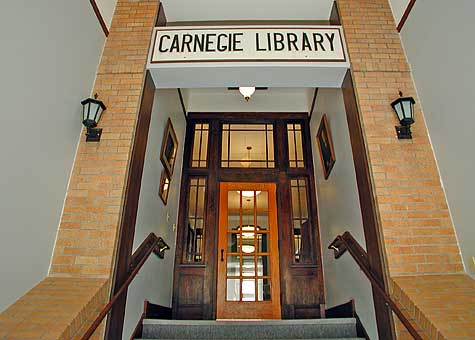
I’ll be doing a book speech about “Down the Mississippi” in FORT BENTON, MONTANA this FRIDAY, JULY 13, 2018 from 3:30PM to 5PM. The event will be hosted by the Chouteau County Library in historic Fort Benton, Montana. The library is located at 1518 Main St, Fort Benton, Montana 59442.

Fort-Benton-Carnegie

The speech will include selected readings about the folks I encountered and documented on my voyage down the Mississippi and will take place at the oldest county library in Montana.  Should be fun!  If you’ll be in the vicinity it’d be great to meet up!

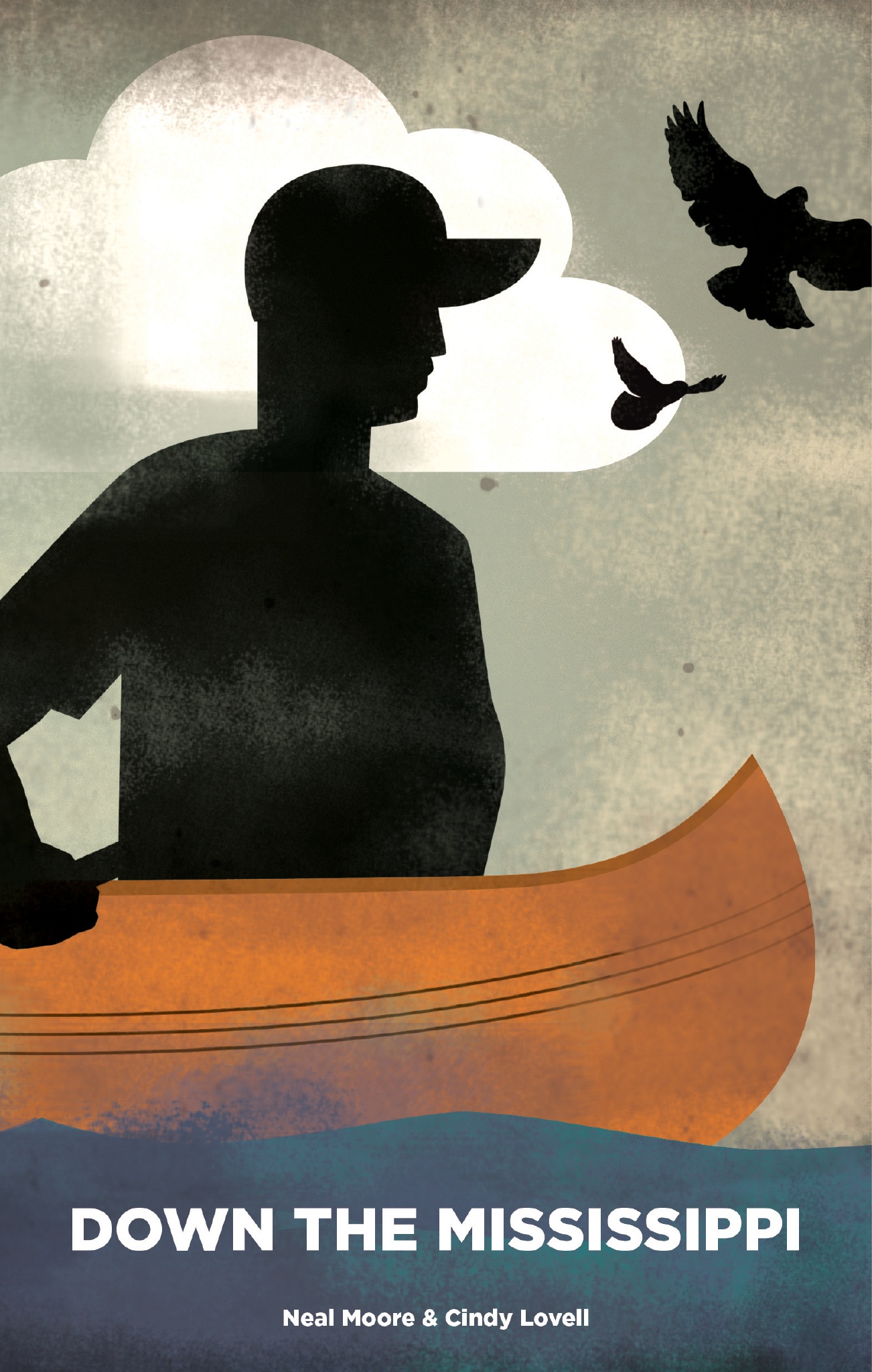
Cover_Front_092513 (1)_preview.jpg